Practical advice for designing, building, planting, and maintaining healthy, beautiful water features year-round.
Summer is finally here in Upstate New York, and if you haven't gotten around to sprucing up your garden pond yet, there's still time. Every year, somebody beats me to the punch and starts cleaning before my seasonal reminders go out, so consider this your timely nudge.
I'm talking about ponds with liners — epdm rubber, fiberglass, concrete, or vinyl. One of the most important jobs is getting the accumulated debris off the bottom. Even if you covered the pond over the winter (I use netting) chances are there are still leaves, twigs, and a layer of muck down there. All that organic matter breaks down, consuming oxygen and contributing to algae problems later on.
A little cleanup now goes a long way toward keeping the water clear and creating a healthier environment for fish, frogs, and aquatic plants throughout the summer. So grab a net, roll up your sleeves, and give that pond a fresh start. Your pond — and everything living in it — will thank you.
Pro Tip: Plant material, silt, soil, tree leaves, sticks, dead frogs — all contribute to the production of algae once the water temperature goes up in late spring.
Pull out the pots of water lilies and other plants if you can, or move them all to one side while you work.
Pump out about half of your pond water, I usually empty down to the first shelf level, then I can stand on the edges.
There are actually some good nutrients and good bacteria in your present pond water, consider it like a 'starter dough' for bread. Unless you've had a serious problem with losing fish to a disease or bacteria, it is best to leave at least half of your pond water.
Take a rag or sponge and scrape down the sides of the liner to get the filament algae that remains. Sometimes you'll get snails and snail eggs this way also.
Replace the plants and refill the pond.
This is always a big question for pond keepers: how to keep their water clear.
REMEMBER: If you can see through to the bottom of your pond you have clear water, NO MATTER WHAT COLOR IT IS.
First let's talk about garden ponds; that is, ponds with plants but no fish. Your pond needs to have at least half of its area 18"-24" deep. Ponds that are all shallow (12"-15" deep) are impossible to keep clear if they are in full sun.
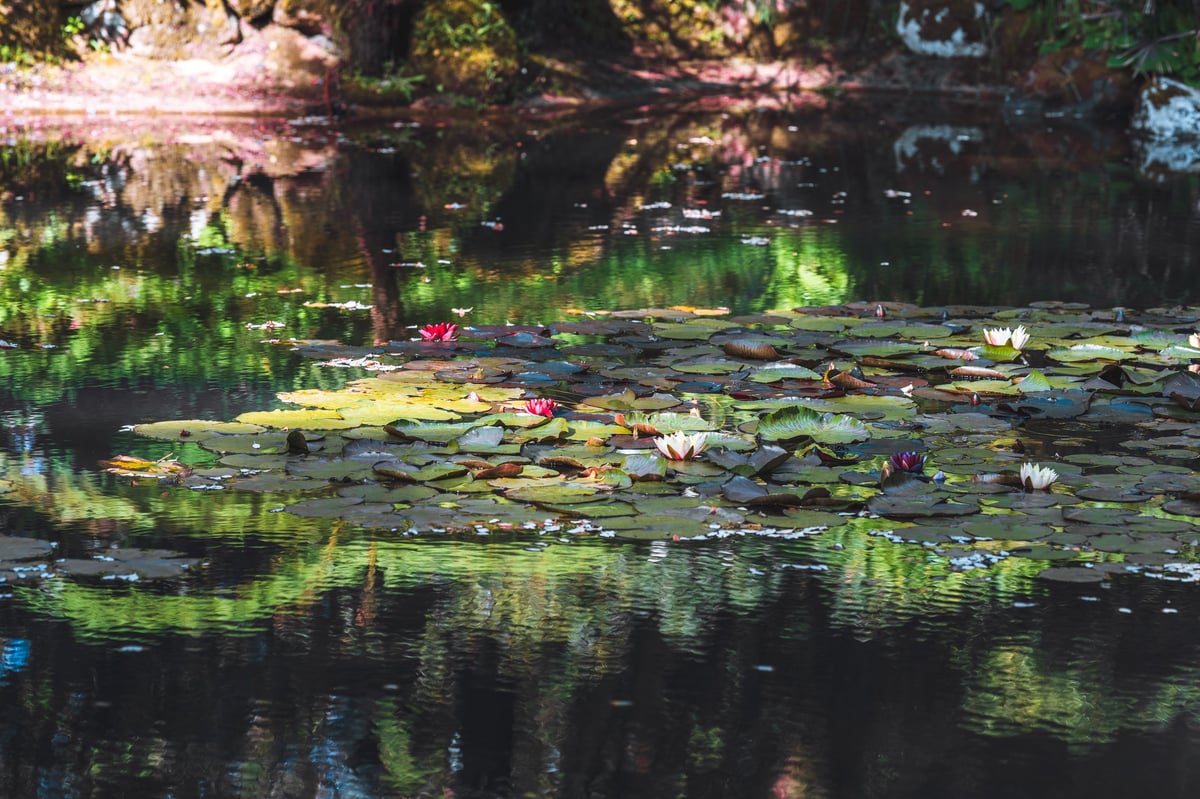
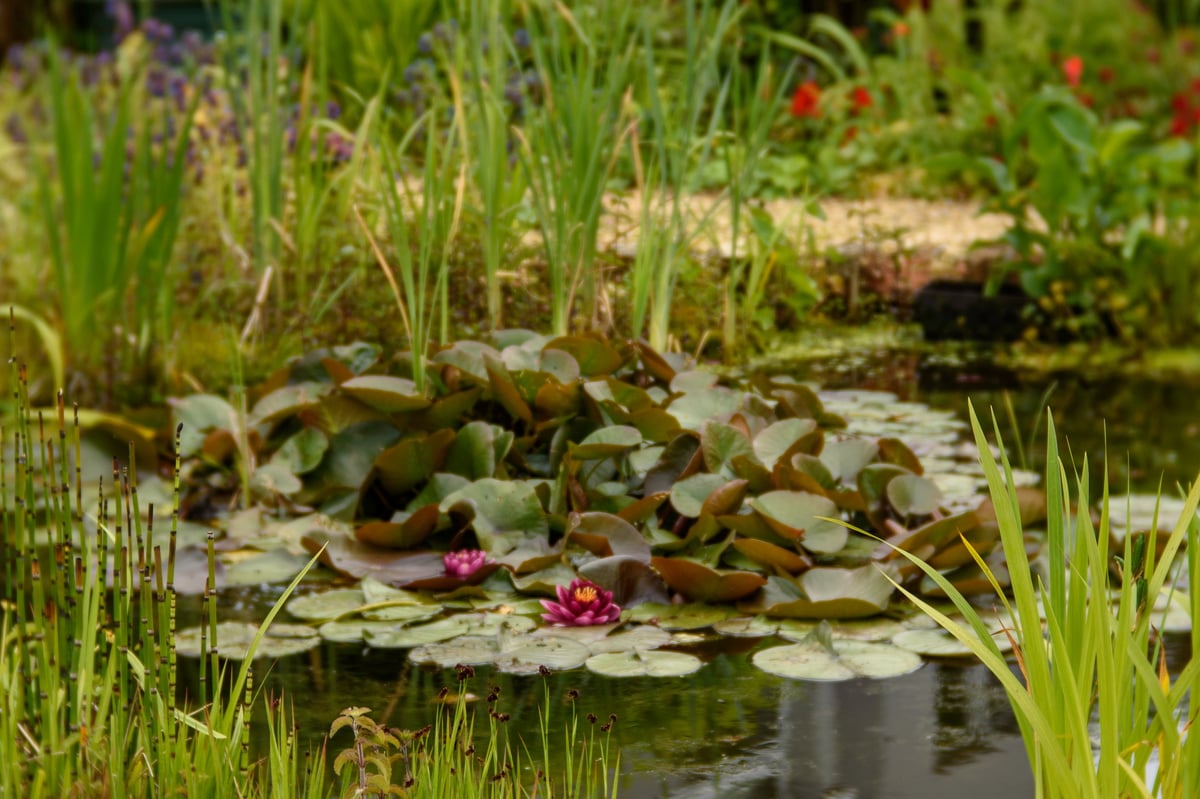
At least half of the surface area should be covered by plant material. Water lilies are the best because of their big leaves.
Surface coverage and water depth eliminate one of the primary causes of algae growth — water temperature (78 degrees or higher) — by keeping the water cooler.
You've already cleaned the matter from the bottom of the pond which produces nitrogen, so the only other factor needed is oxygen. All plants produce oxygen when they go through their growth process, but only one plant is beneficial to a pond in balancing the nitrogen and oxygen.
It looks like seaweed, and it grows below the surface of the water.
Plant at the rate of 3 stems for every 2 square feet of surface area.
Example: A 10ft × 12ft pond = 120 sq ft ÷ 2 = 60 bundles of anacharis (3 stems each)
In the summer when the water heats up above 78 degrees, you may get an algae bloom. If it is filament algae, or floating, just scoop it out periodically — it is not harmful.
If you can see through your pond water to the bottom or close to it, you have 'clear water'.
Ponds are not supposed to be crystal clear, or blue, like your pool.
If it is green like pea soup, you must increase the number of plants in the bottom, and increase your surface coverage.
Waterfalls and fountains create oxygen in the water, but truly not enough to counter balance the other factors which produce nitrogen. They are nice features for your pond, and the sound is wonderful, but don't think that this alone will keep the water clear.